a story lives forever
Register
Sign in
My Profile
Sign in
Register


|
Editor's pick
|
The most popular stories
|
|||||||||||
|
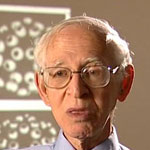
Pink teeth Dorothy Hodgkin - ScientistThese were the Christmas lectures he gave for children, in, I think, about 1924 or 1925, and, again, it's my mother's influence; she thought they sounded interesting and bought them for me for a Christmas present. So I was, I was very much interested in that. When I got to Oxford, I found that I couldn't, in fact, start to go to courses by the x-ray crystallography because there was no crystallography, x-ray crystallography taught, and nor could I go to biochemistry, because the biochemistry lab was just being built. It was a gift from the Rockefeller Foundation, and was looked after by Sir Archibald Garrod, who was the just-retiring Regis Professor of Medicine. And he was a friend of my father's, rather luckily, because his daughter was a pre-historian, an archaeologist and dug caves in Palestine, and so they suggested that I should go around and see Archibald Garrod, and so I had a lovely morning being shown over the new, not-yet-used, biochemistry lab, and told stories of what Archibald Garrod himself had worked on. And this, of course, is a fascinating subject, which is well known now, on inborn errors of metabolism. When I went to Cambridge later, to which he retired, I borrowed his book and read it, and I, I still remember some of it, which features the discovery of pink teeth in a certain family he met in the course of his medical work. And this was through the metabolism of the porphyrins having gone astray, and the one... the isomer was deposited in the teeth, was one in which the side-chains were differently arranged from all of the rest. [Q] And it coloured the teeth? It happened... it happened with haemoglobin. And actually, it happened again. I'd come across this fact from Robinson's lectures. Robinson had come to us as a new, very famous inorganic chemistry professor at Oxford during the time I was an undergraduate, and I remember his lectures on the porphyrins, particularly on the discovery of the structure of haematoporphyrin being the apex of the five-membered rings of acetyl, propionyl, residues alternately sort of long-short, long-short, long-short, long-short, is one, and then the different varieties of the permutations of these spaces: long-short, long-short, long-short, short-long, which is the haemoglobin one. And Robinson had amused himself giving the orders of these residues and saying why this odd one had occurred in pink teeth, but leaving the haemoglobin, the actual one, until the last. So one was waiting all the time to know what haemoglobin was like. |
|