NEXT STORY
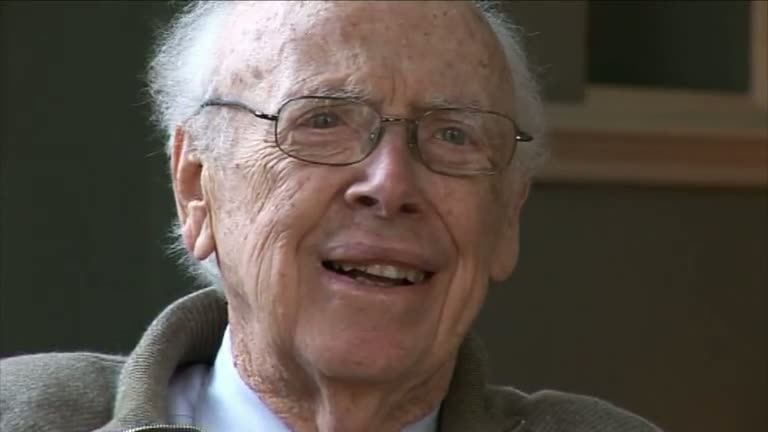

Discovering DNA - who did what
RELATED STORIES


Video URL


NEXT STORY
Discovering DNA - who did what
RELATED STORIES


|
Views | Duration | |
|---|---|---|---|
| 91. The complexity of the modern world and IQ | 240 | 05:15 | |
| 92. My son Rufus, memory and IQ | 1165 | 05:01 | |
| 93. Memory and old age | 174 | 04:13 | |
| 94. Discovering DNA - who did what | 219 | 03:42 | |
| 95. Three meetings to mark my 80th birthday | 100 | 01:11 | |
| 96. The cancer meeting | 110 | 08:56 | |
| 97. Glycolosis, cancer and metabolomics | 570 | 06:55 | |
| 98. Vitamin D | 238 | 02:48 | |
| 99. More on cancer | 1 | 137 | 09:08 |

American molecular biologist James Dewey Watson was best known for discovering the structure of DNA for which he was jointly awarded the 1962 Nobel Prize in Physiology or Medicine along with Francis Crick and Maurice Wilkins. His long career saw him teaching at Harvard and Caltech, and taking over the directorship of Cold Spring Harbor Laboratory in New York. From 1988 to 1992, James Watson was head of the Human Genome Project at the National Institutes of Health.
Title: Memory and old age
Listeners: Martin Raff Walter Gratzer
Martin Raff is a Canadian-born neurologist and research biologist who has made important contributions to immunology and cell development. He has a special interest in apoptosis, the phenomenon of cell death.
Walter Gratzer is Emeritus Professor of Biophysical Chemistry at King's College London, and was for most of his research career a member of the scientific staff of the Medical Research Council. He is the author of several books on popular science. He was a Postdoctoral Fellow at Harvard and has known Jim Watson since that time
Duration: 4 minutes, 13 seconds
Date story recorded: November 2008 and October 2009
Date story went live: 18 June 2010